The Dolphins

About Dolphins

Origin and Evolution

Dolphins belong to the Class Mammalia, Subclass Theria, Infraclass Eutheria (placentals), Superorder Cetartiodactyla, which includes the Arctiodactyla such as cattle, deer, camels, and hippos, and the Cetacea. The term Cetancodonta has been used to group the evolutionary lineage of cetaceans and hippos. The term “cetacean” comes from the Greek “ketos,” meaning whale or sea monster.

Cetaceans have a single origin, a process known as monophyly. Studies indicate that modern cetaceans evolved from terrestrial animals that colonized estuarine areas around 55 million years ago. The transition to aquatic life appears to have occurred in the region that now corresponds to the Mediterranean Sea and the Asian subcontinent.

The order Cetacea includes three suborders. Archeoceti consists of extinct species. The suborder Mysticeti groups the baleen whales, which, instead of teeth, have flexible, blade-shaped baleen plates in their mouths. And the suborder Odontoceti comprises toothed whales, such as dolphins.

The suborder Mysticeti comprises four families: Balaenopteridae (whales such as humpback whales and minke whales), Balaenidae (right whales and bowhead whales), Eschrictiidae (gray whales) and Neobalaenidae (pygmy right whales).

The suborder Odontoceti is divided into 10 families: Ziphiidae (beaked whales), Physeteridae (sperm whales), Kogiidae (dwarf sperm whales), Platanistidae (Asian river dolphins), Pontoporiidae (portraits), Lipotidae (baiji), Iniidae (pink river dolphins), Delphinidae (dolphins, killer whales, and pilot whales), Phocoenidae (porpoises), and Monodontidae (narwhals and beluga whales). Dolphins are the names given to members of the families Delphinidae, Iniidae, and Pontoporiidae.

Dolphins are found in all marine environments worldwide, with the exception of the poles. Some dolphin species live in rivers, along the coast, entering estuaries, and on the high seas, and in some cases, they are widespread.

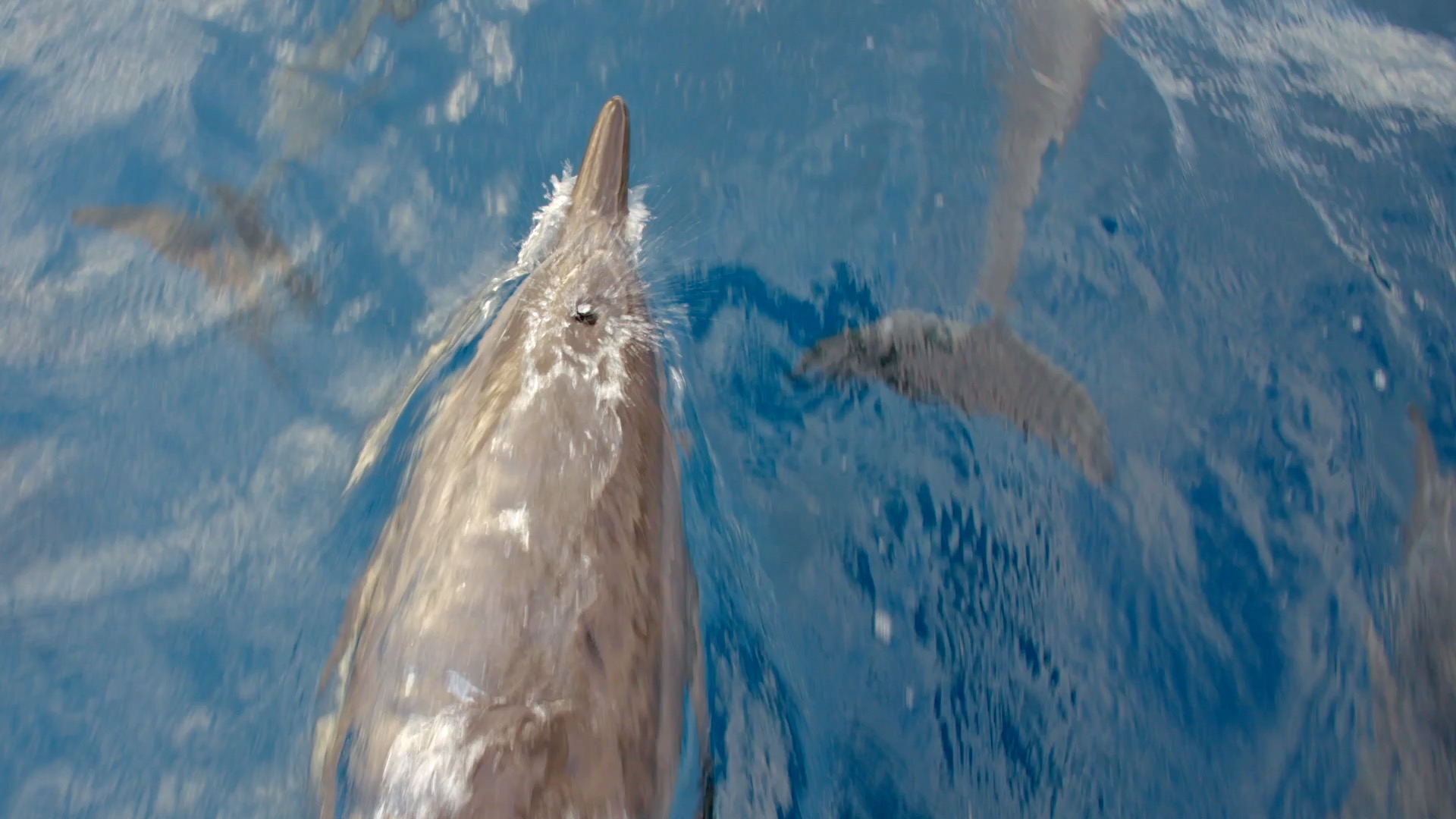
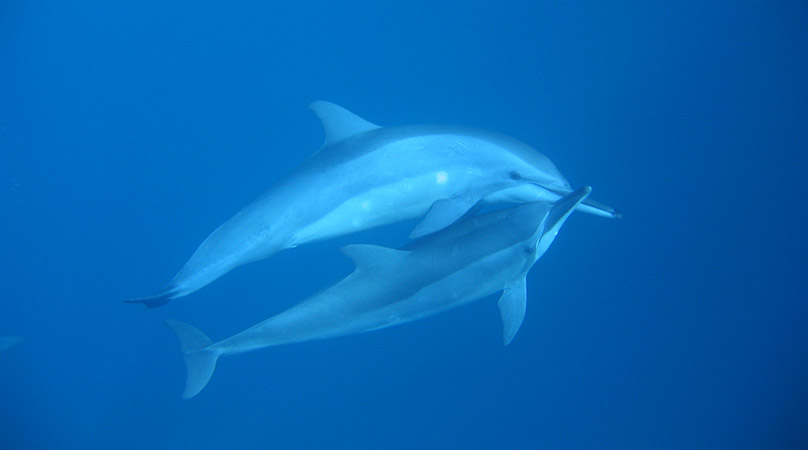
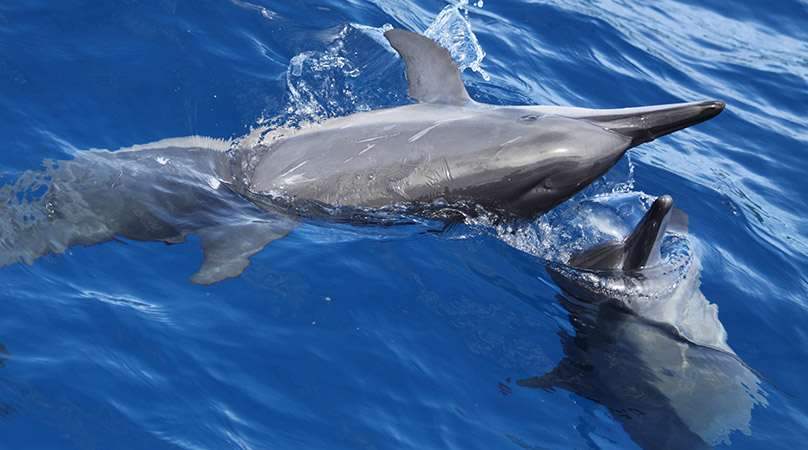
In Brazil, the most commonly found dolphins are the pink dolphin, the toninha, the tucuxi, the gray dolphin, the bottlenose dolphin and the spinner dolphin.

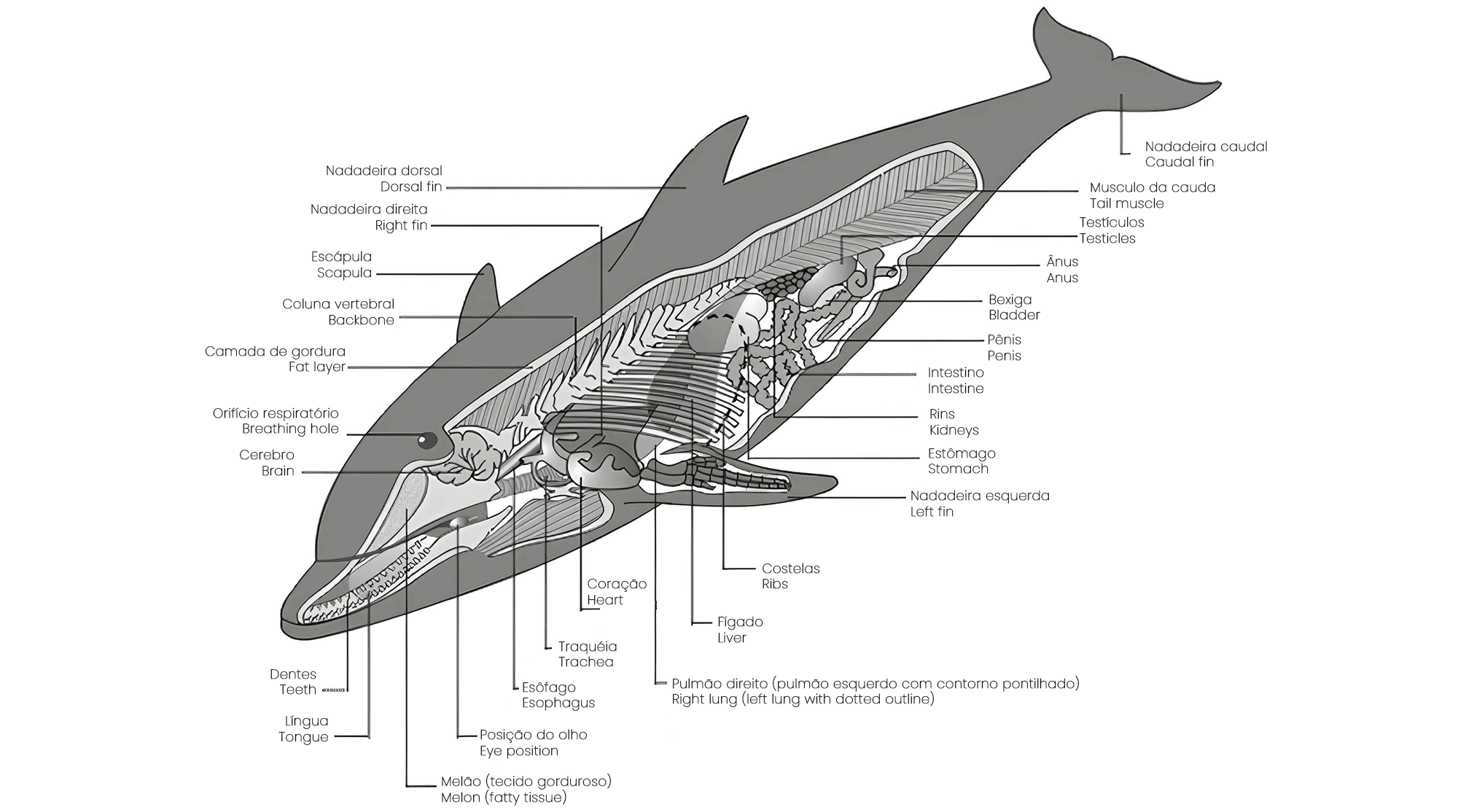
Anatomy

Dolphins have evolved anatomically for life in the aquatic environment, particularly in terms of external morphology, acquiring a more hydrodynamic shape and becoming the mammals most adapted to water.

Internally, dolphins have an anatomy very similar to that of other mammals, with the same organs and functions. Internal adaptations were more physiological for diving and life in freshwater.

Breathing

Dolphins breathe through their lungs, which allows them to come to the surface to perform gas exchange.

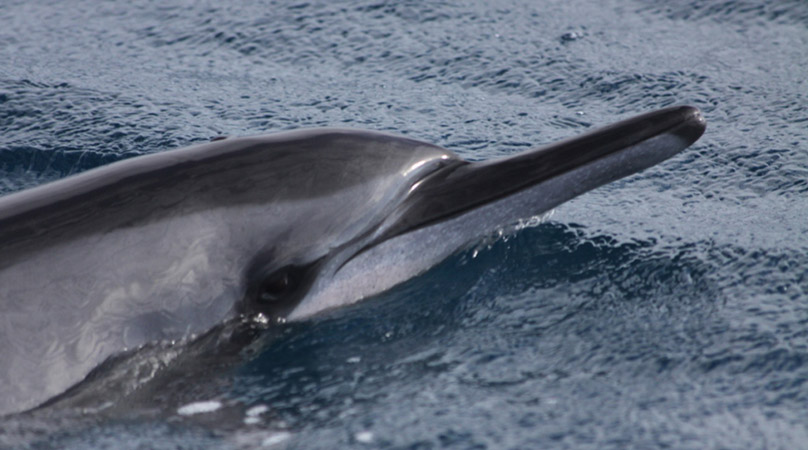
The breathing hole, or blowhole, works like a valve, which opens when the dolphin comes up to breathe and closes when it goes underwater.

Osmoregulation

Dolphins have less concentrated blood and much denser urine than seawater, due to the high efficiency of their kidneys.

Cetaceans do not drink seawater; they absorb the amount of fresh water they need by digesting their prey.

Another source of water for dolphins is metabolic water, obtained from the metabolism of food molecules, when hydrogen atoms combine with oxygen atoms to produce H2O.

Vision

Like humans, dolphins have eyes that contain cones, rods, and retinal photoreceptor cells.

Dolphins distinguish colors, respond to light, see above water, and can use their vision to identify other pod members, boats, predators, and obstacles.

An extension, like a curtain, on the upper margin of the iris, descends over the pupil forming two small pupils. The double pupil provides dolphins with several advantages, such as binocular vision in each eye.

Echolocation

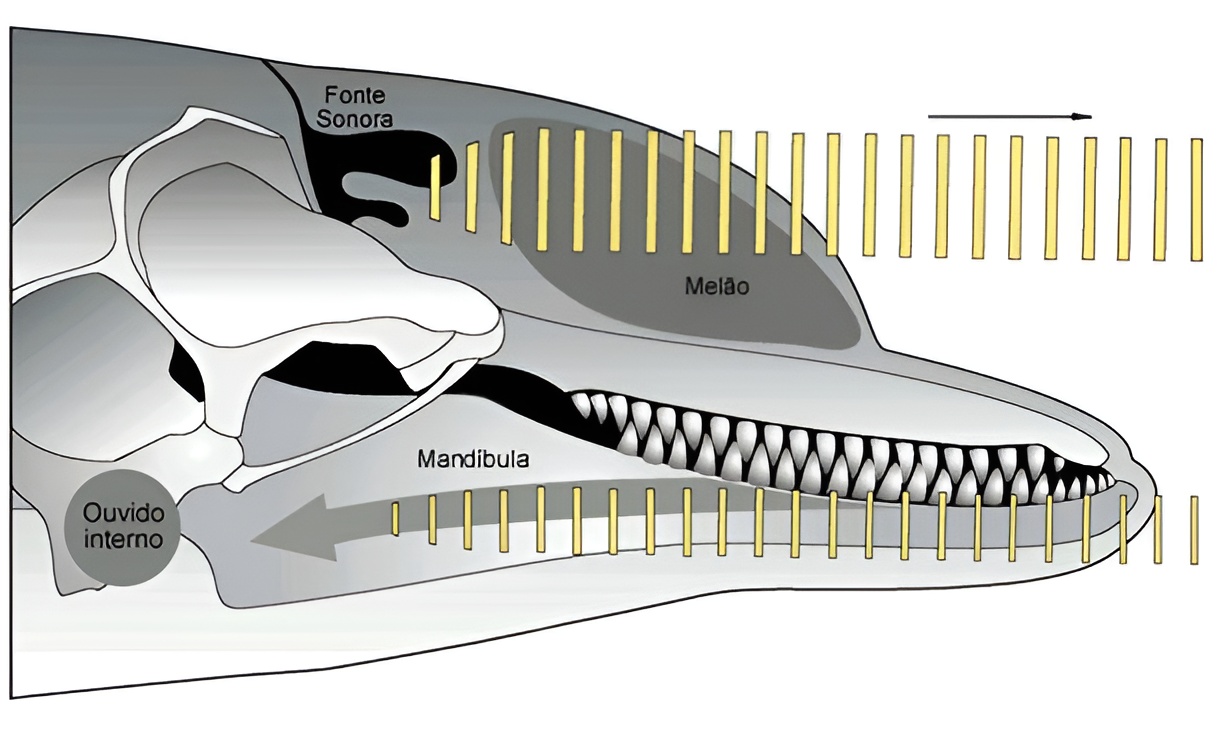
Dolphins have an orientation and location system known as echolocation.

Through it, high-frequency sounds, inaudible to the human ear, are produced by the vibration of the air ducts and directed to the external environment through the “melon” (protuberance on the front of the head), which acts in directing the sound waves and alters their frequency and wavelength.

When sounds hit an object, the echo returns to the dolphin, which captures them through its jaw and ear. These are transmitted to the brain, which analyzes them in terms of location, shape, texture and composition.

Dolphins use echolocation to locate an object, detect subtle differences in objects, disorient schools of fish, or break up a school.

Intelligence

Due to the complexity of their social structures, their communication systems and the morphological and physiological characteristics of their brain, dolphins are considered very intelligent animals.

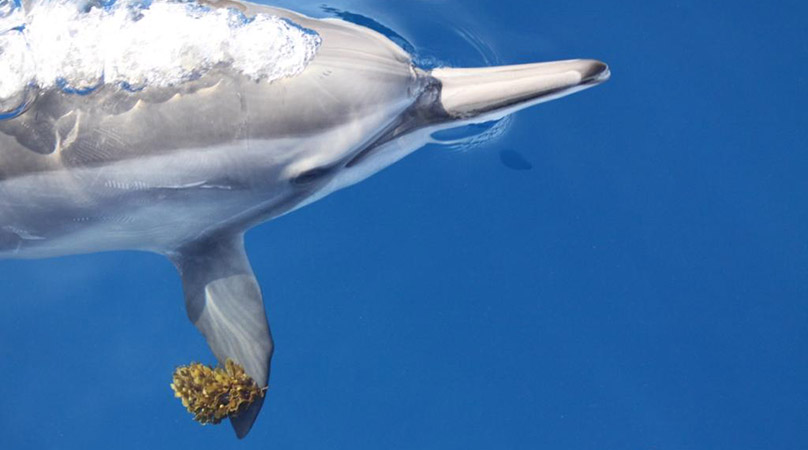
Proportionally, in relation to the weight and volume of the animal’s size, the spinner dolphin’s brain is the third largest, weighing around 1.5 kg, while the human brain is the sixth.

The dolphin’s associative cortex, the part of the human brain specialized in abstract and conceptual thought, is larger than that of humans. The spinner dolphin’s brain has had its current characteristics for at least 30 million years.

Playful Side

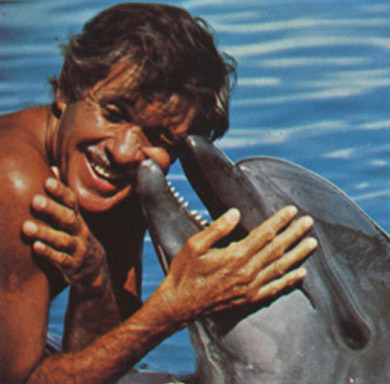
Humans’ relationship with dolphins has given rise to myths and legends about these animals. In most cultures, dolphins are considered sacred, harmless animals, and are not used as food.

The history of humanity is full of references to the interaction between humans and dolphins, from Greek mythology to Amazonian legends, where the figure of dolphins is always linked to sexuality, fertility and intellectuality, characteristics that are attractive and sympathetic to the human species.

Strategy

A metaphor created by Dudley Lynch and Paul Kordis of the Brain Technologies Institute divides humans into three classes of animals: carp, sharks, and dolphins.

When attacked, the carp doesn’t back away, doesn’t retaliate, and doesn’t fight. It resigns itself to its fate as a victim. Carp are those who play the win-lose game, losing so that someone else can win. The shark believes it will run out, and since it will, it should run out for someone else, not for itself. Sharks play the win-lose game; they must always win, not caring if the other loses.

The dolphin’s strategy consists of cultivating trust in every sense: in oneself, in others, and in the entire Universe. Playing the win-win game. Knowing how to do more with less. Living long-term while also being mindful of the present, the short term. According to the metaphor, dolphins think: “The Universe is potentially abundant, there’s something for everyone. For me to win, you don’t need to lose.”

Environmental Impacts

Due to the abundance of raw material they provide, whales have been harvested for centuries. Species such as blue whales, fin whales, sei whales, and sperm whales reached threatening population declines in the middle of the last century. Fortunately, in the 1970s, a global movement to protect whales began, culminating in the declaration of a global moratorium on whaling in the middle of the following decade. Intentional capture of dolphins is low, but accidental capture (unintentional and unavoidable) and bycatch (which could have been avoided) pose a threat to the conservation of these animals.

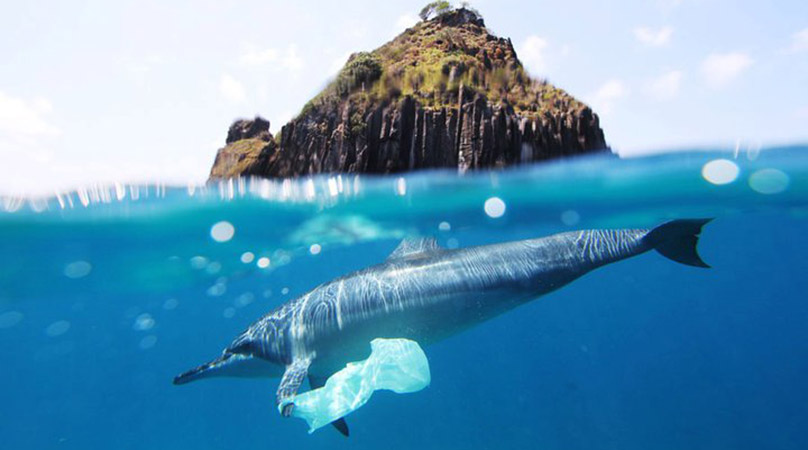
Another detrimental effect of human activity on cetaceans stems from ocean pollution with harmful substances, such as pesticides and heavy metals. In Brazil, cetacean contamination by pollution, particularly heavy metals, has already been observed in several species, such as the Guiana dolphin and the French dolphin. The high amount of trash in the sea, particularly plastic and fishing gear waste, has been a problem for dolphins. The similarity in appearance between plastic and squid or jellyfish confuses dolphins, potentially leading them to ingest these materials. Remnants of fishing gear, such as lines and pieces of nets, are frequently observed tangled and slowly cutting into the bodies of cetaceans.

Oil and gas exploration using seismic surveys has caused serious problems for cetaceans, as the air guns used in this activity cause explosions that affect the cetaceans’ orientation system, particularly their tympanic bullae and echolocation system.

Despite being relatively new, whale-watching tourism also impacts these animals. Dolphin and whale watching plays an important role in education and in developing the non-lethal use of cetaceans, but it must be conducted under strict guidelines for approaching the animals.

Suggested video

O Projeto Golfinho Rotador é
finalista TOP 3
do prêmio Green Destinations.