
The Dolphins
Noronha’s Spinners
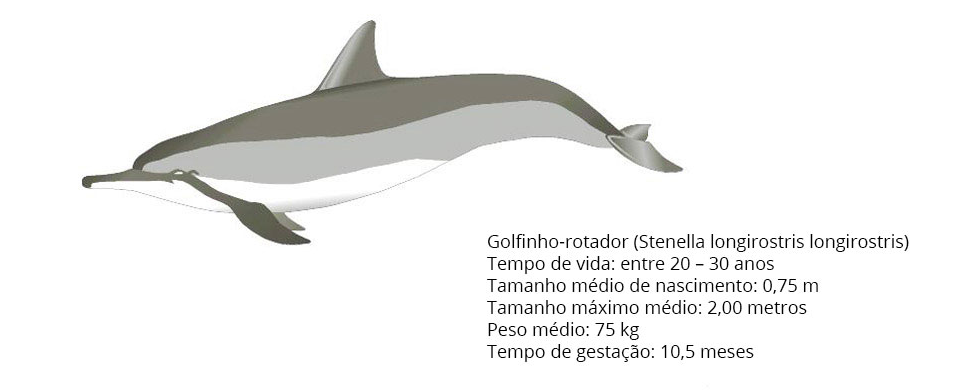
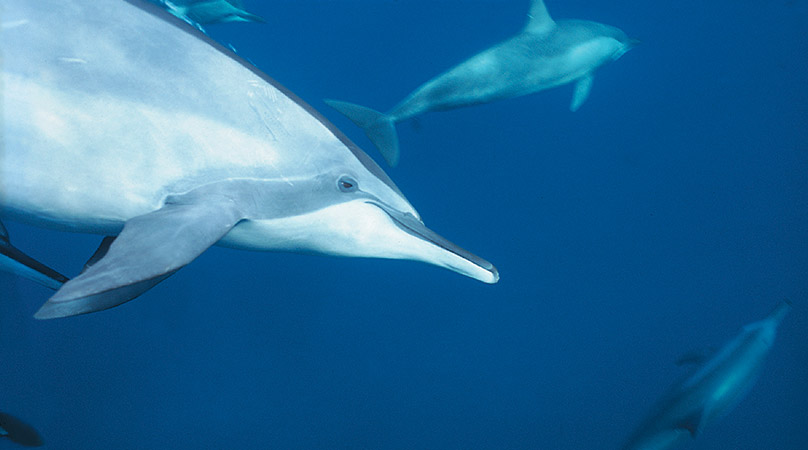
More than 99.99% of the dolphins found around the Archipelago of Fernando de Noronha belong to the spinner dolphin species, Stenella longirostris, from the Delphinidae Family.
Currently, the following subspecies are recognized for the species Stenella longirostris: Stenella longirostris longirostris, S. l. orientalis, S. l. centroamericana, and S. l. roseiventris. The spinner dolphin found in Fernando de Noronha belongs to the subspecies S. l. longirostris, known as pantropical.
The spinner dolphin is scientifically known as “Stenella” because of its slender body and “longirostris” because of its long beak. The popular name for spinner dolphin is due to its behavior of jumping out of the water and performing up to seven rotations around its axis.
The spinners found around Fernando de Noronha’s Archipelago reach maximum 2 meters in length, 75 kg in weight and have a tricolor pattern: dark gray on the back, light gray on the flanks and white on the belly.
Distribution
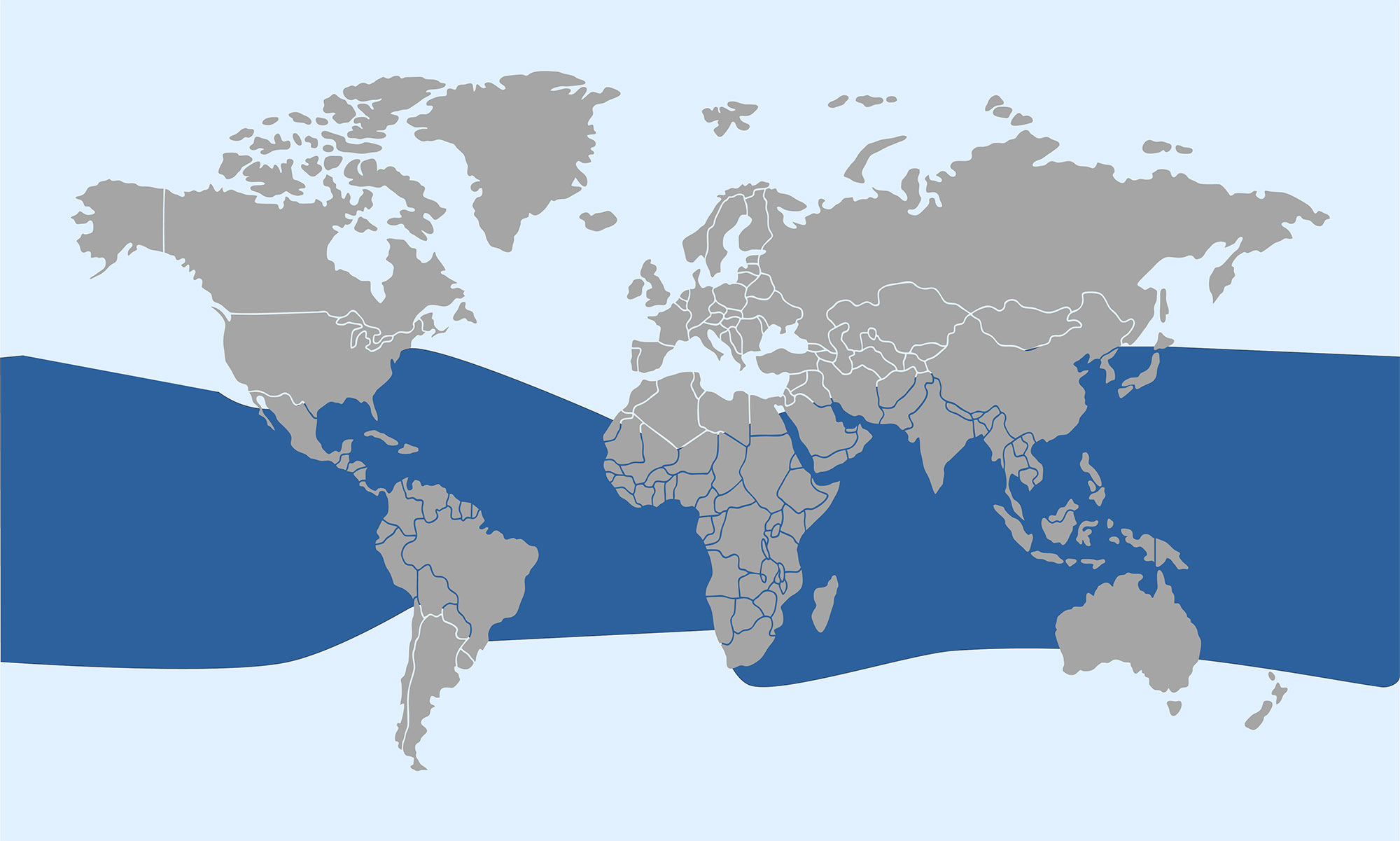
The spinner dolphin, the third most abundant species of dolphin in the world, is a cosmopolitan species living in tropical ocean waters in the Atlantic, Pacific and Indian Oceans. It never enters rivers and is rarely observed near the continental coast.
Spinners can look for shelter in calm waters from inlets at oceanic islands, such as Kealakekua Bay, Hawaii, and Dolphin Bay, Fernando de Noronha. In Brazil, there is a record of the occurrence of this species from the Archipelago of São Pedro and São Paulo to the state of Rio Grande do Sul, and highlighted around the Archipelago of Fernando de Noronha.
According to our hypothesis, the spinners of Noronha live on the Underwater Mountains Chain of Fernando de Noronha. An area with rectangular shape between Fernando de Noronha, Rocas Atoll and Sírius Bank, located 400 km east off Noronha.
The spinner dolphins move over an area of up to 700 km, and can reach 150 km in 24 hours. The average speed of the spinners in rest bays is 5 km/h when entering and 6 km/h when leaving the bay. The average cruising speed of the spinner groups is about 10 km/h and the maximum speed recorded is 40 km/h.
Sociobiology
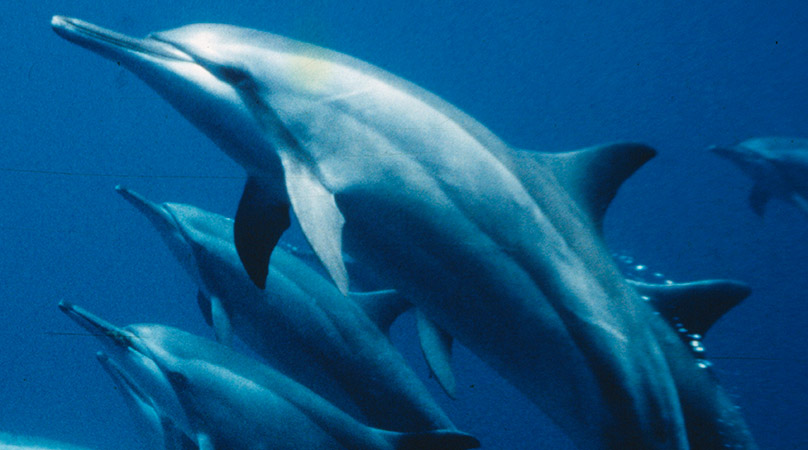
Spinner dolphins have gregarious habits, with very fluid social groupings, in size and constitution. These groups can range from 3 to more than 2,000 individuals that move freely among different company circles in a matter of minutes, hours, days or weeks.
The social structure of the spinners is very fluid, in which the paternal figure does not exist. The family bonds are derivations of the relation mother-daughter and sister-brother. According to these bonds, dolphins assemble into family units called pods. Adult males join, split up and rejoin pods in different combinations. The smallest social structure of the spinner dolphins is the “family cell”, led by an older female, the matriarch. Several “family cells” come together to form a “grouping” which may contain several generations of the same family.
Communication
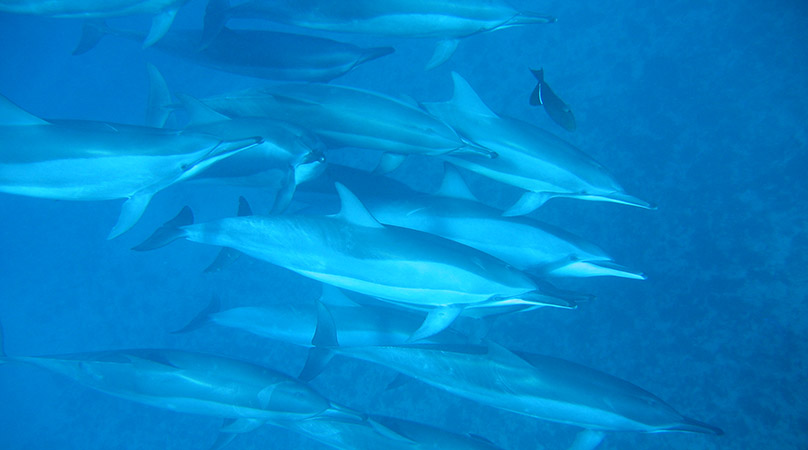
The spinner dolphins have a complex social behavior, with several communication systems such as visual, tactile, chemical-sensory, acoustic and aerial activities. These last two we have been able to study in Noronha.
Acoustic
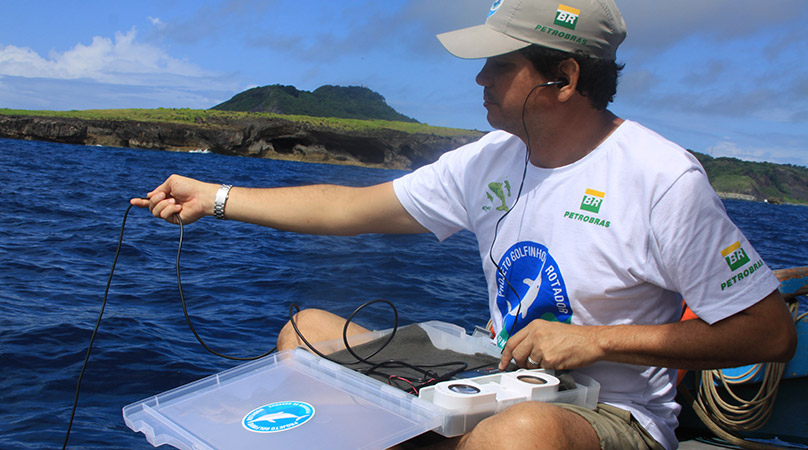
Dolphins are known to produce a large variety of sounds, usually grouped into three major categories: echolocation clicks, that are pulsed sounds of very short duration; pure tone whistles; and an array of sounds, less distinct, of burst pulsed broadband signals, such as screams, harsh metallic cries, barks and calls.. Echolocation clicks are used for sonar purposes. Echolocation is not a form of communication, but rather a method of ‘seeing’ the world through sound.
The production of whistles is associated with movements of the left nasal plug, while the production of clicks is related to the movement of the right nasal plug. Some sounds made in the air are generated by the blowhole. The production of sounds is the responsibility of the nasal system through the closing and vibration of ducts and air sacs of the skull.
The sound signals vary according to the behavior of the dolphins.
Aerial
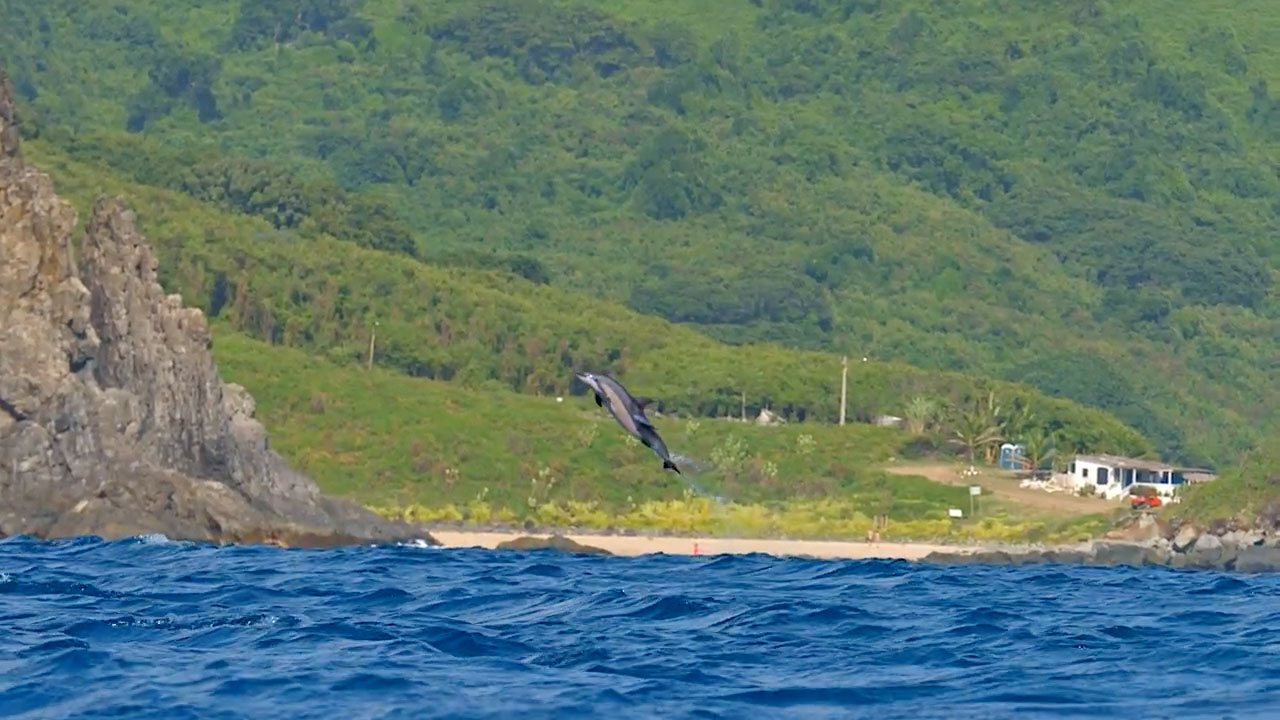
Aerial movements reflect the behavior of the group and are related to the daily dolphin cycle. The aerial activities are correlated to the degree of activity, the general alertness, the displacement or the cohesion of the cetacean group.
The air communication system consists of several patterns of jumping and beating with body parts on the surface of the sea, which produce characteristic turbulences when the dolphin re-enters the water.
Areas of Concentration
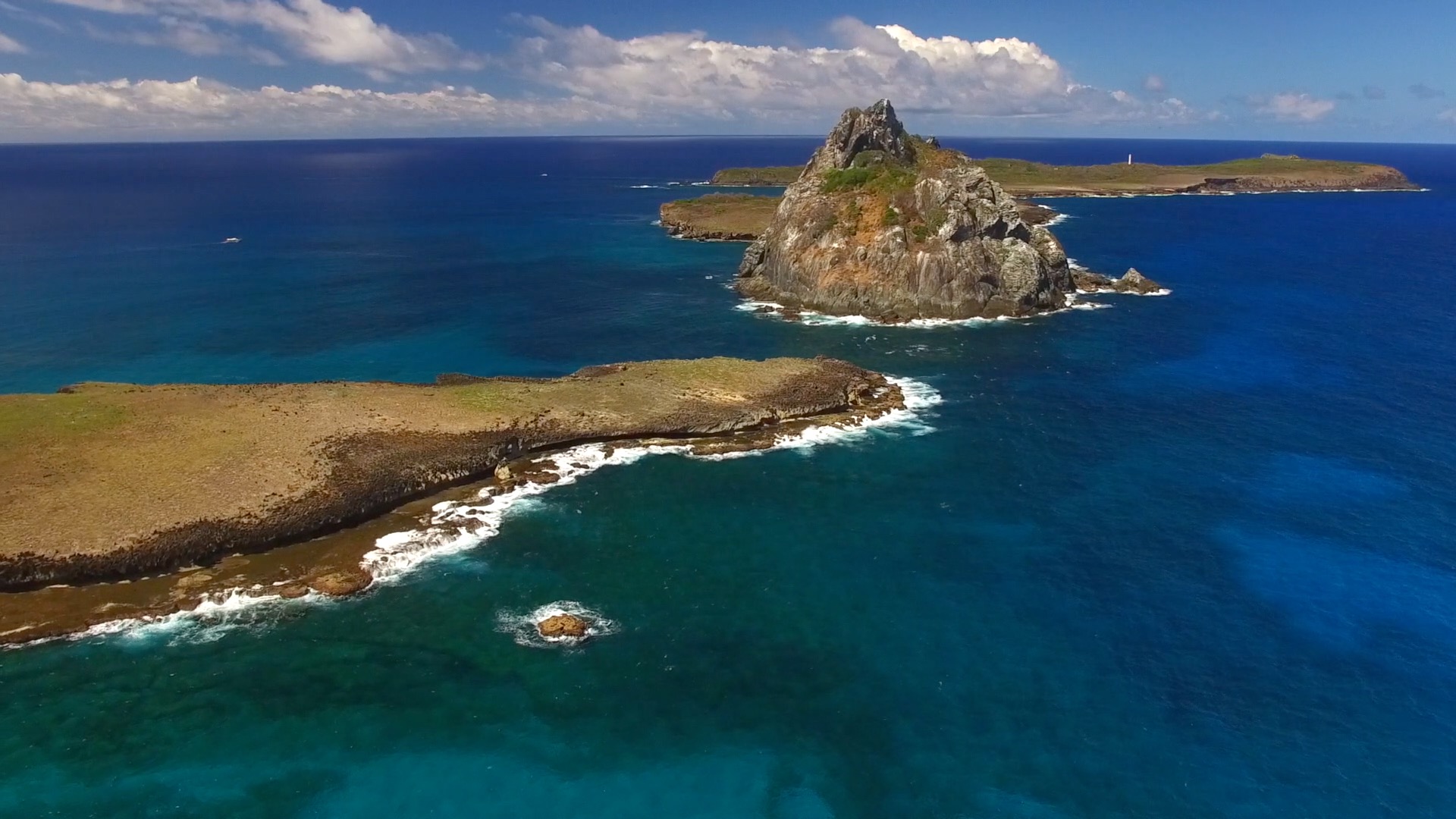
In the two areas of larger concentration and frequency of Stenella longirostris, the Bay of Dolphins and “Entre Ilhas”, it was observed that the spinners carried out vital behaviors for their biological cycle, except for feeding. They were seen resting, in sexual activities, nursing their calves, looking out for threats, communicating, being infected by pathogenic agents and interacting with other animal species. The spinners’ feeding behavior, which has never been observed in the Bay of Dolphins or “Entre Ilhas”, usually occurs in the “Mar de Fora”. Below a general overview of their behavior.
Dolphin Bay
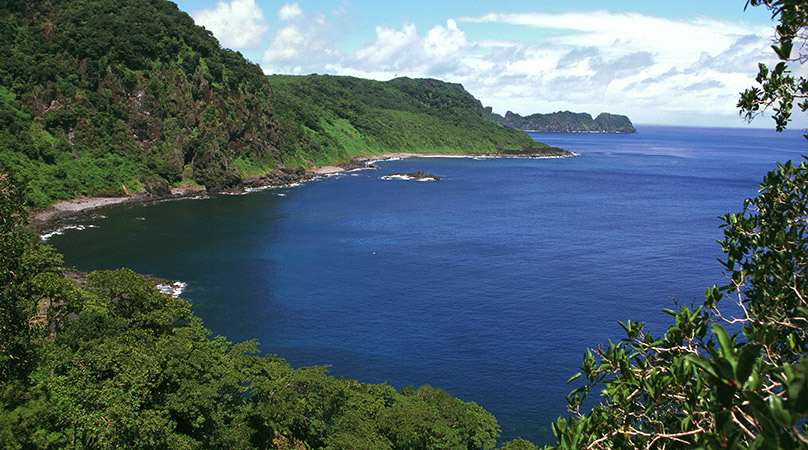
From 1991 to 2015, between 2 and 2,719 spinner dolphins entered Dolphin Bay on 94% of days, with an average number of 284 spinners per day, and remained between 1 minute and 12 hours and 45 minutes, with an average of 3 hours and 33 minutes.
A clear decrease in the time spent by spinners in Baía dos Golfinhos was observed over the years of study, particularly from 2003 onwards. This decrease was negatively correlated with the traffic of tourist vessels in front of the cove.
During the rainy season, from March to June, spinners stay for a shorter period of time, come in smaller numbers and less frequently to Baía dos Golfinhos.
Santo Antônio Bay / Between Islands
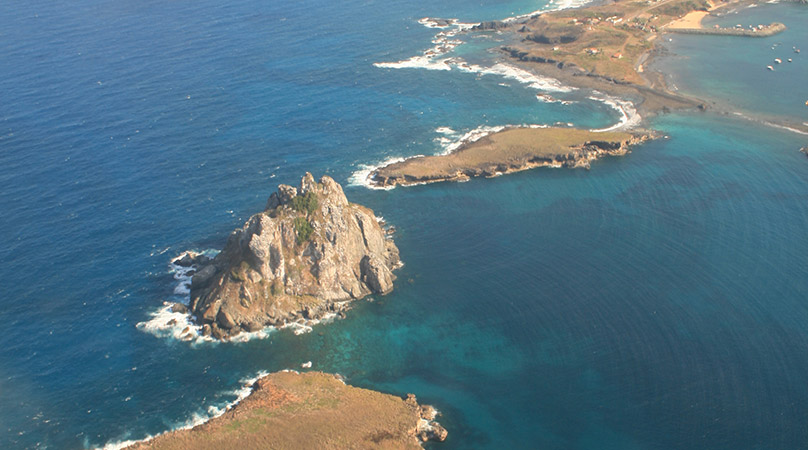
Santo Antônio Bay/Entre Ilhas has been the second most popular resting spot for spinners in the Fernando de Noronha Archipelago since our research began in 1990. However, spinners’ priority for this area is increasing, while the length of stay of these cetaceans in Baía dos Golfinhos is decreasing. In 2009, the length of stay of dolphins in both areas was statistically equal.
Sexual Strategy
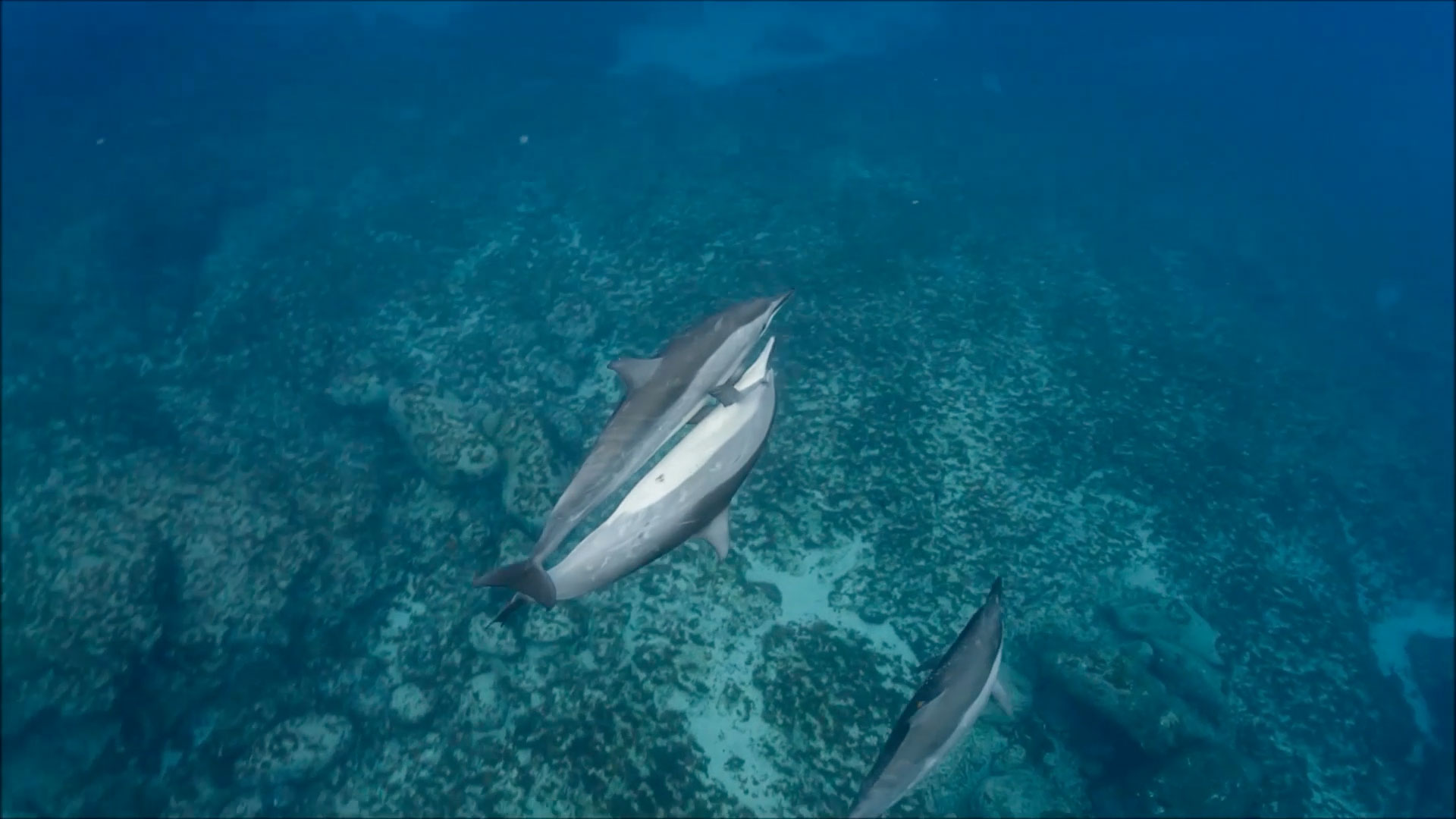
Sexual activities occur during most of the time the spinners are in the Bay of Dolphins and can be divided into two classes: reproductive and non-reproductive. The sexual strategy of the spinners of Fernando de Noronha is considered scientifically as promiscuous, polygamous and polygynandrous, being characterized by multiple and indefinite sexual partners and with sexual activities happening for reproductive purposes or not, for physical pleasure or social interaction.
Guarding Behavior
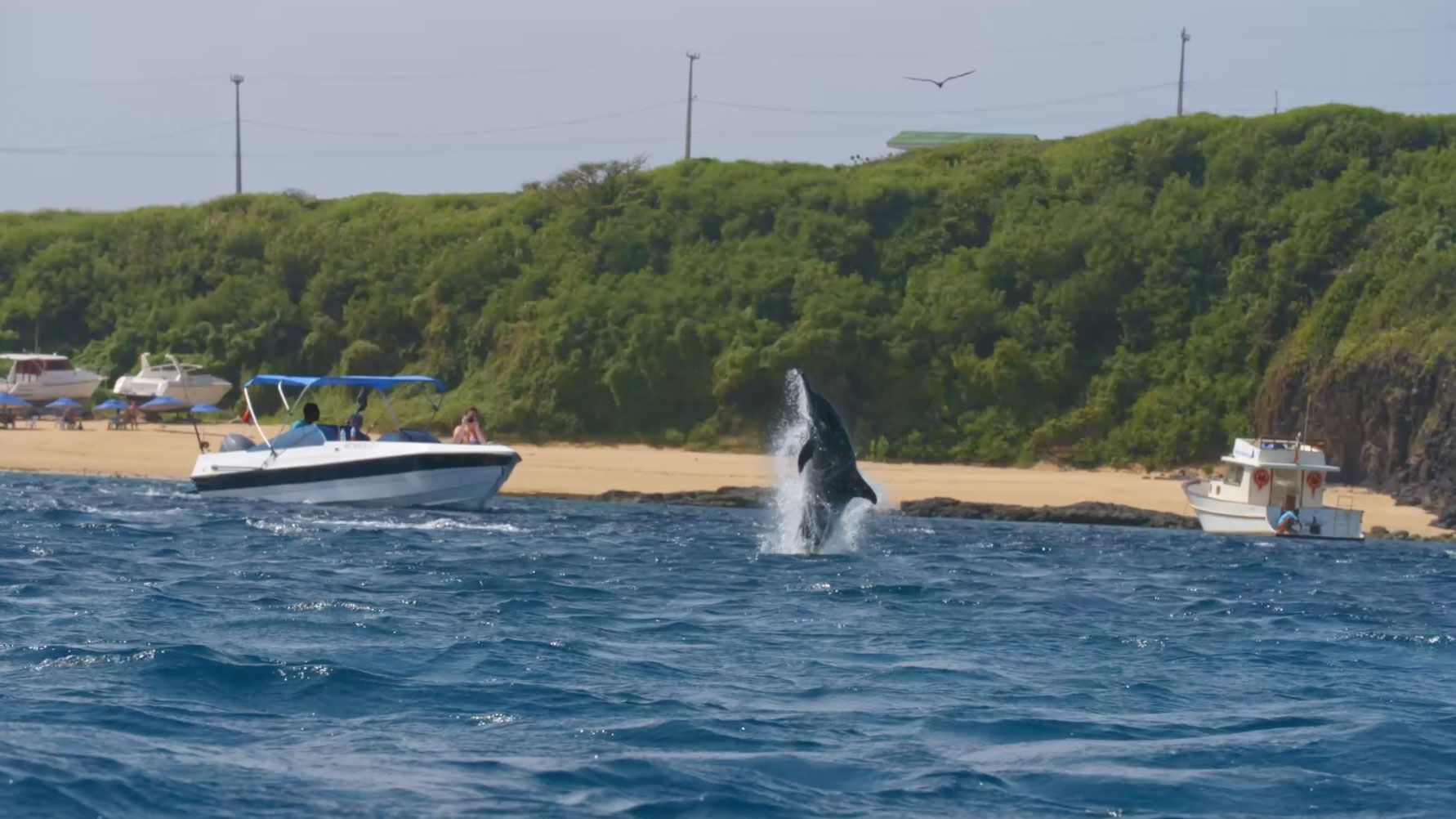
We observed in Fernando de Noronha that some specific behaviors are performed preferably by adult males, which, for animals with a complex social structure such as dolphins, are defined as protection activities accomplished by the individuals that are on “guard” protecting the group from threats, whereas other individuals may engage in other activities, such as rest, reproduction and parental care.
These behaviors classified by us “on guard” are: to confront sharks, accompany vessels, surround divers and perform aerial activities. The spinners that are on guard are the leaders of the moment, and, when they cease to be on guard, they take up other activities, such as rest. At this point, probably another spinner will be on guard taking the leadership. For this reason, it is a temporary and shared leadership.
Conservation
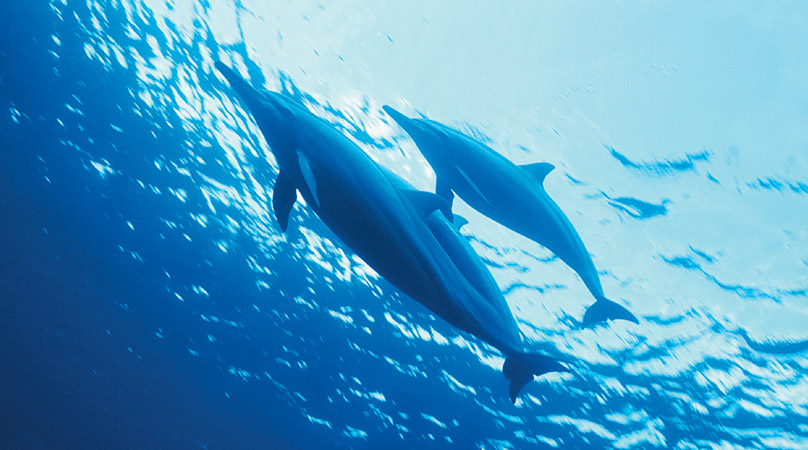
The species Stenella longirostris is classified as “insufficiently known” by the International Union for the Conservation of Nature. The International Whaling Commission has proposed as priority studies for dolphins the determination of the size of populations that stimulate the non-lethal use of animals, such as the researches done by the Spinner Dolphin Project.
The Action Plan for Aquatic Mammal in Brazil of the Chico Mendes Institute for Biodiversity Conservation (ICMBio), which classifies the spinner dolphin in the category of “insufficient data”, proposes the development of studies on the population dynamics and the natural history of the dolphins of Fernando de Noronha, aiming at providing subsidies for its conservation and management, such as the researches done by the Spinner Dolphin Project.
Turned on the red light
Despite the work of the Chico Mendes Institute for Biodiversity Conservation (ICMBio) and the Spinner Dolphin Project, nautical tourism has negatively impacted the spinner dolphins in Fernando de Noronha.
The length of permanence of spinner dolphins in the area of the Marine National Park, the Bay of Dolphins, has decreased since 2003, from a daily average of 8 hours and 31minutes in 1998 to 2 hours and 37 minutes in 2015. This decrease in the occupation of the Bay of Dolphins has a significant negative correlation between permanence and vessel traffic. From 1998 to 2015, the daily average of tourist vessels in front of the Dolphin Bay rose from 3.75 to 12.
On the other hand, the concentration of spinner dolphins staying for more than 1 hour per day in the area “Entre Ilhas” increased from 10% of the days of the year between 1991 and 2006, to 30% of the days in 2007, to 70% of the days in 2008 and to 87% of the days in 2015.
This is a first warning that the spinners can leave Fernando de Noronha. If it were not for the Spinner Dolphin Project protecting this population of dolphins, the spinners would have already left the Island.
Spinner dolphins do not need Noronha but Noronha needs these dolphins, because after all, they are one of the great tourist attractions of the archipelago!