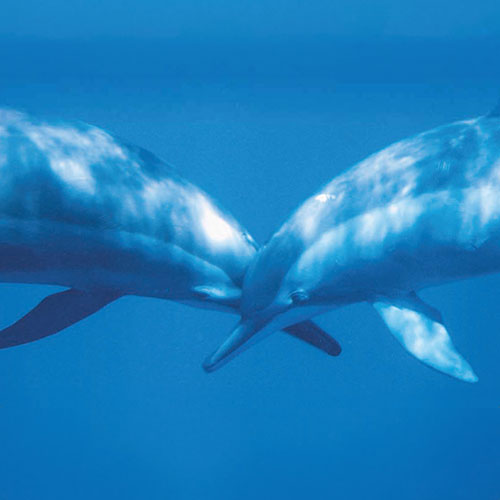
The Dolphins

Spinner Responds

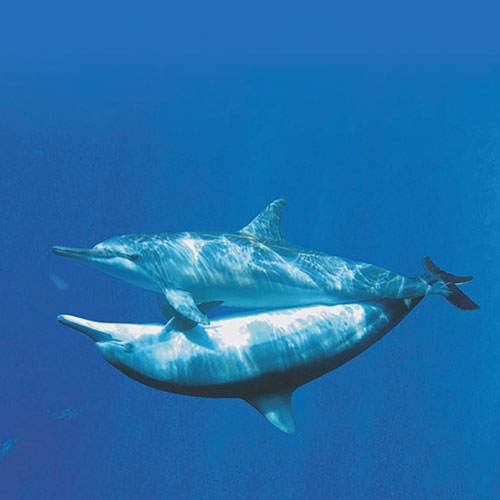
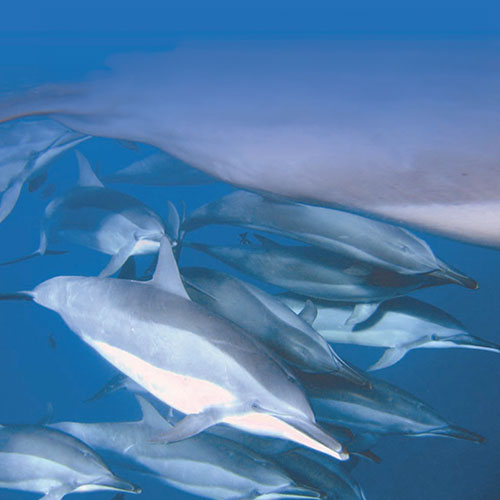
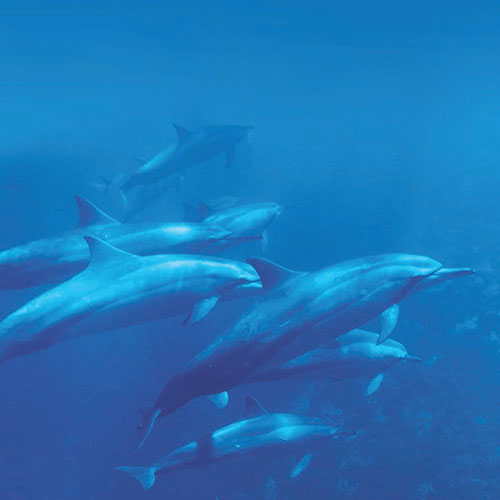
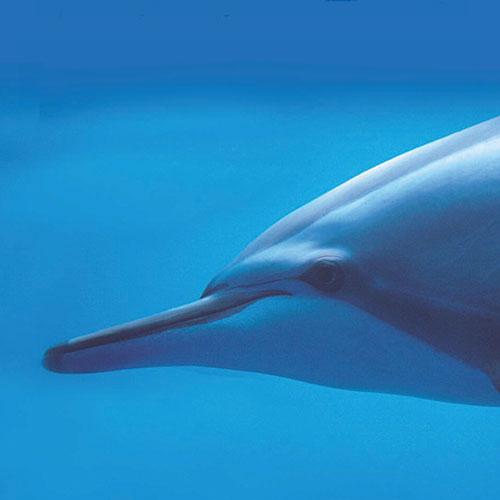
Spinner dolphin (Stenella longirostris longirostris)

  • Lifespan: 20–30 years
  • Average birth size: 0.75 m
  • Average maximum size: 2.00 m
  • Average adult weight: 75 kg
  • Gestation period: 10.5 months

01. Where do dolphins come from and where do they go?

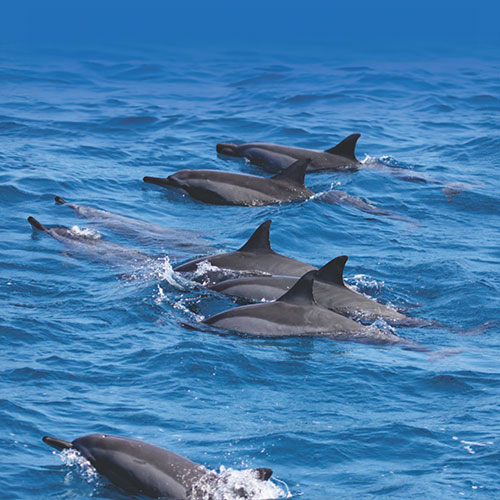
Dolphins feed primarily at night. Thus, usually shortly after sunrise, they arrive in Fernando de Noronha from feeding areas located around the archipelago or in the Fernando de Noronha underwater mountain range, up to 200 km away.

In the late afternoon, they return to the food areas, not necessarily to the same ones they were in the previous day.

02. What do dolphins do in Noronha?

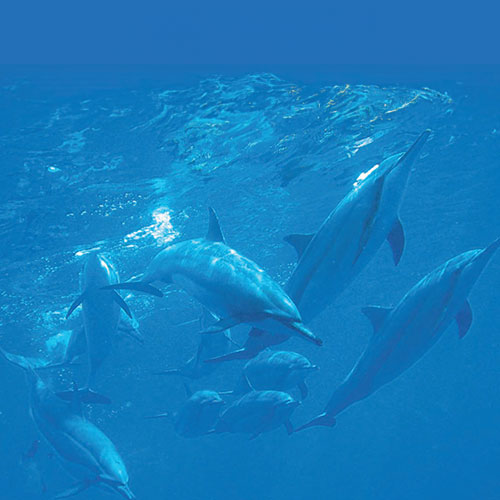
During the day, dolphins use the areas of the Mar de Dentro to rest, reproduce, care for their young and seek refuge from predators.

And when the Inner Sea gets rough, the dolphins might be in the Outer Sea.

03. Are dolphins seen every day?

We have historical records, dating back to 1990, of dolphin sightings on 93% of the days of the year, with the main areas of concentration being Dolphin Bay, Santo Antônio Bay, and the Entre Ilhas Cove.

04. How many dolphins are there on the island?

The maximum number of dolphins ever recorded simultaneously in one day in Dolphin Bay was 2,719 in 2014.

But, on average, 352 dolphins enter Dolphin Bay every day.

05. How do you count dolphins?

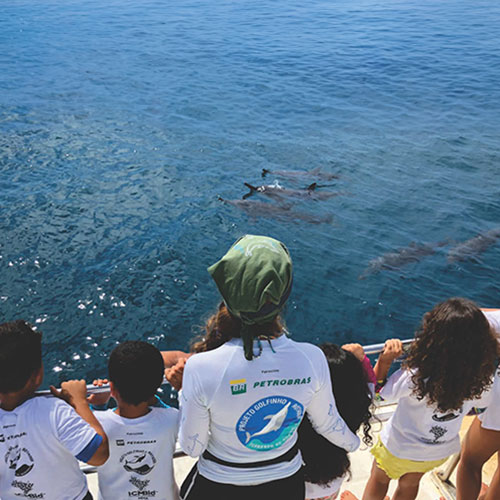
When the dolphins arrive at the bay, they line up.

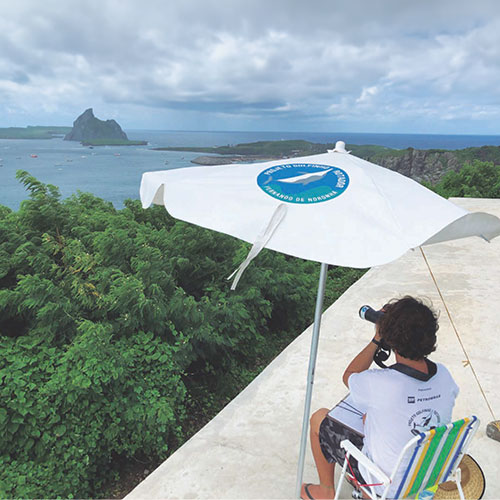
We then positioned the binoculars’ field of view in front of the first dolphin in the group and counted with a mechanical counter as the dolphins passed through the binoculars’ field of view.

06. How do you know how many and where the dolphins are in Fernando de Noronha?

Through monitoring carried out at the Dolphins Lookout and at the Nossa Senhora dos Remédios Fort, from Monday to Friday.

Monitoring begins at 5:30 am and ends at least at 4 pm, and may continue until dark.

07. How many species of dolphins are found?

The species that regularly visits Fernando de Noronha is the spinner dolphin.

However, we have recorded the occasional presence of other cetaceans, such as the spotted dolphin, the pilot whale and the humpback whale.

08. Do dolphins need to come up to breathe?

Dolphins are mammals and have lungs, so they need to constantly come to the surface to breathe and carry out gas exchange.

They can remain submerged for up to 3 minutes and 30 seconds when resting and for around 5 minutes when feeding.

09. What do dolphins eat?

Dolphins feed on prey smaller than 20 centimeters, such as small squid, red shrimp and fish such as garapau, needlefish and albacore.

Dolphins surround their prey before capturing it.

10. What are the predators of Noronha’s dolphins?

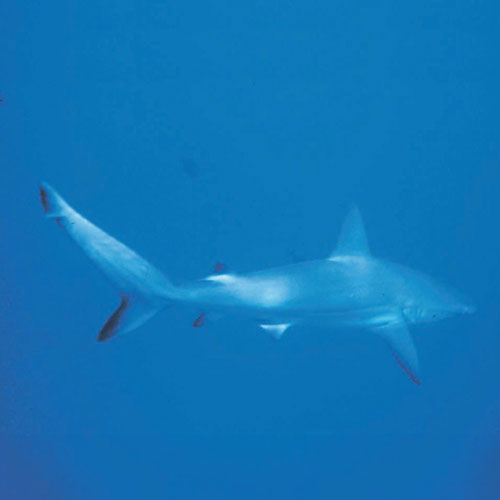
The main predators of dolphins are sharks, such as tiger, hammerhead, sharp-billed and cookiecutter shark.

The cookiecutter shark simply removes disc-shaped pieces of dolphin adipose tissue.

11. Why do dolphins follow boats?

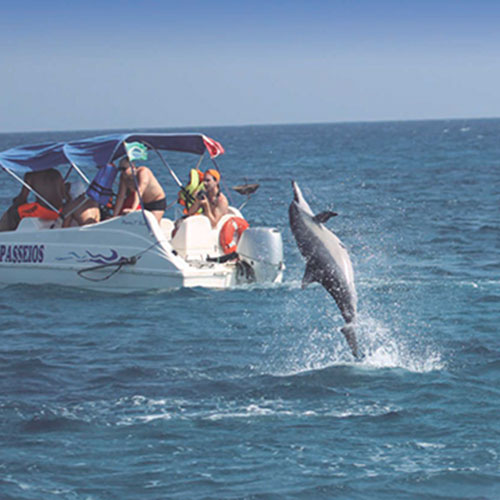
Following the boat is a behavior that serves to distract the boat and minimize the impact on the entire pod of spinner dolphins.

This behavior is typically performed by the guard group, which is composed primarily of adult males.

12. Why do dolphins jump?

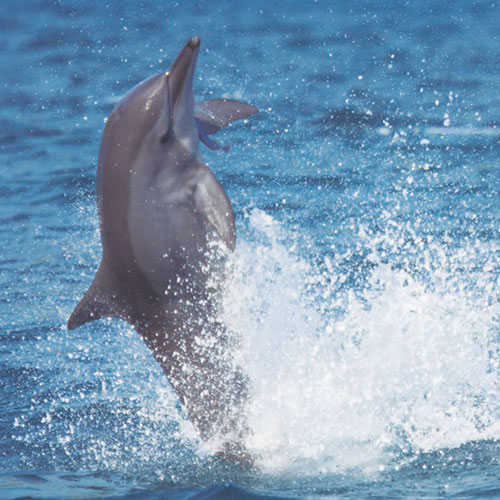
The aerial activities (jumps) of dolphins are a behavior used for communication.

When jumping, re-entry into the water produces a patch of bubbles that the dolphins see as a message.

13. Why is it not possible to swim or dive with dolphins?

Dolphins come to Fernando de Noronha to engage in intimate behaviors (resting, breeding and caring for their young).

The presence of people in the water causes dolphins to perform these vital behaviors less frequently, spending time and energy on alert due to our presence, which they may perceive as a threat.

14. Does the Spinner Dolphin Project only care for dolphins?

The Spinner Dolphin Project cares for dolphins and the people who are near them, through its environmental education, sustainability, and community engagement programs, working with all classes from the two schools in Noronha, training the local population to work in ecotourism and assisting the island’s entrepreneurs in implementing a sustainable management system in their businesses.

15. Is the Spinner Dolphin Center part of ICMBio?

We are not from ICMBio.

The Spinner Dolphin Project is run by the NGO Centro Golfinho Rotador and sponsored by Petrobras, through the Petrobras Socioambiental program.

ICMBio, as well as several other institutions on the island and outside the island, is our partner.

16. Where are the results of the Spinner Dolphin Project’s research and actions published?

The monitoring data is used for publications in books, scientific articles, undergraduate theses, master’s dissertations, doctoral theses, lectures, our media and other communication channels, and to guide public conservation policies.

Some information is also available online:

17. How can I help the dolphins in Noronha?

Firstly, respecting the legislation protecting them and Fernando de Noronha, made available by ICMBio and the Spinner Dolphin Project.

We can also spread our messages in favor of ocean conservation by sharing the Spinner Dolphin Project’s social media or by joining the Spinner Dolphin Center as a collaborating partner, which has been responsible for carrying out the main research, environmental education, community involvement and sustainability initiatives in Fernando de Noronha since 1992.

O Projeto Golfinho Rotador é
finalista TOP 3
do prêmio Green Destinations.